

Data Centres, Energy, and the Talent Bottleneck

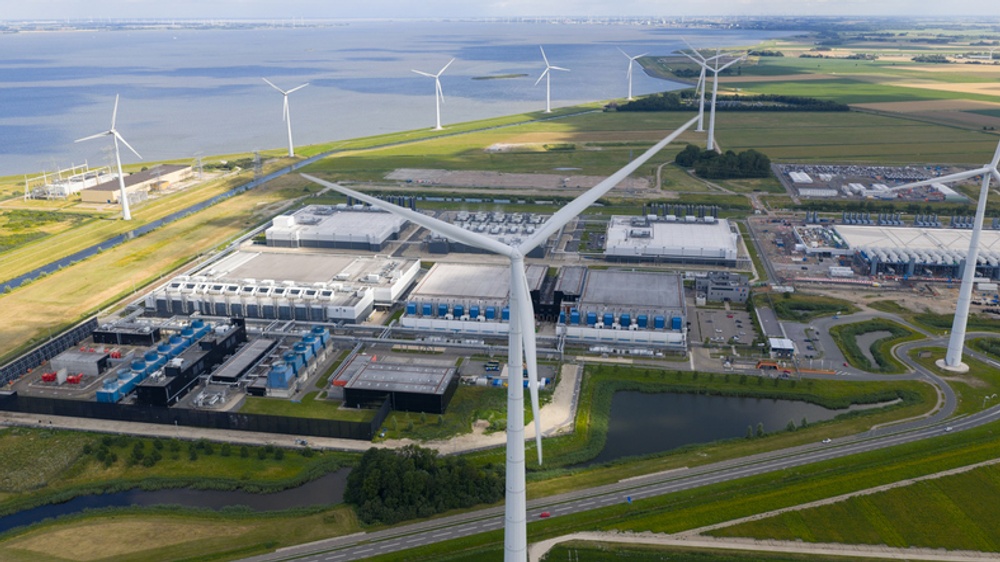
For years, data centres operated on a familiar playbook: secure enough power, build in layers of redundancy, and scale capacity as demand grew. That model made sense when growth was predictable, and grids had room to absorb it. However, the acceleration of AI has pushed energy demand to a level that now resembles the growth curve of entire cities, and the infrastructure supporting that demand is straining under the pressure. The conversations I have point towards a shift - it’s no longer just about sourcing power, but about how data centres fit into the increasingly complex systems that deliver it.
The industry is moving from a simple consumption model to one that requires genuine integration with the grid. The challenge isn’t only how much energy a facility uses; it’s whether that energy can be delivered reliably, sustainably, and in a way that aligns with local constraints. Power‑purchase agreements don’t guarantee grid capacity, renewable projects don’t solve transmission bottlenecks, and remote generation doesn’t ease the strain on local infrastructure. What used to be framed as a sustainability issue has become a far broader energy infrastructure challenge.
On top of this, increasingly, it’s a talent challenge.
As data centres become more intertwined with energy systems, they need capabilities that historically lived inside utilities, transmission operators, and energy market specialists. Power systems engineering, grid connections management, energy market structuring, storage optimisation, and real‑time operational flexibility are no longer niche skills. They’re becoming fundamental to how modern data centres operate. Yet the pool of people who can do this work is small, highly specialised, and already in high demand. Hyperscalers, developers, utilities, and energy companies are all competing for the same expertise.
This matters because energy constraints are already slowing projects, but talent constraints are increasingly doing the same. Without the right people, organisations struggle to navigate interconnection complexity, design viable energy strategies, integrate storage and flexibility, or operate dynamically with the grid. Even when power is technically available, the capability to use it intelligently may not be.
The operating model for data centres is evolving across three stages: procurement, alignment, and integration. The industry has pretty much mastered the first stage, buying renewable energy, and many operators are progressing through the second i.e. locating facilities near generation and available capacity. The third stage, true integration with the grid, is where the real opportunity lies. It requires flexible workloads, integrated storage and cooling, active grid participation, and real‑time system intelligence. Critically, it requires the people who know how to design and run these systems.
We observe several talent functions emerging as the most strategically important, and the most constrained.
-
Senior commercial leaders who can articulate the value of multi‑asset energy systems to developers, utilities, and large energy‑intensive enterprises.
-
Grid and interconnection specialists who understand load‑flow modelling, utility coordination, and the realities of congested queues.
-
Project delivery leaders capable of orchestrating complex deployments across storage, solar, cooling, and AI‑based controls.
-
Supply chain experts who can navigate equipment scarcity, long lead times, and the growing need for vertically integrated technology partners.
These roles are becoming foundational to the next generation of data‑centre operations - and they are exactly where organisations are feeling the pressure.
This is also where Hyperion Search is playing an increasingly important role. As the sector’s talent demands shift from traditional data‑centre operations toward deep energy‑system expertise, Hyperion is helping operators, developers, and utilities secure the specialised leadership and technical capability required to build, integrate, and operate these new energy‑centric facilities. The firms that succeed in the coming years won’t just secure power; they’ll secure the people who know how to model it, manage it, and integrate it.
In a market where grid capacity is tight, scrutiny is rising, and complexity is accelerating, competitive advantage will be built as much on people as it is on power.
David Beeston