

Scaling Kraken: Talent, Timing, and the Bit Nobody Talks About in Building a Unicorn
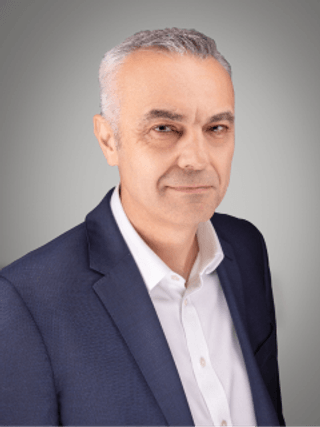
Just before Christmas I recorded a podcast with Devrim Celal, again!
He first came on Leaders in Cleantech back in January 2019, pre-COVID, in a Manchester office, when he was CEO of Upside Energy. Since then, Upside was acquired by Octopus; the product evolved into Kraken; and the “ten years in one company” has included multiple lives inside one journey.
It’s an extraordinary story, but what struck me most wasn’t the scale. It was the texture of it. The unglamorous day-to-day reality of building something meaningful.
Kraken today is contracted to serve 70+ million homes across 10+ countries; it monitors 600,000+ devices, managing just shy of 6GW of optimised power. At one point Devrim mentioned something that landed hard: the managed charging is roughly equivalent to the daily electricity use of a city the size of Manchester.
But the real value of the conversation (for me) was what it reveals about what it actually takes to scale.
There were plenty, but here are a few takeaways I’m still chewing over.
1) The “phases” are real, and each one asks different things of you
Devrim described the decade not as one continuous journey, but several distinct phases.
That matters because founders often beat themselves up when things feel harder later, even though the business is “successful”.
But scaling isn’t one skill. It’s a sequence of transitions, or phases as Devrim put it.
Early days: you’re thinking about payroll and runway, even if you’ve raised well. Later: the decisions get bigger, and the cost of being wrong becomes… louder.
Even going into a new country becomes emotionally different when you’re moving at scale. It’s not just “try it and see”; it’s “try it and see… with a lot of people watching, a lot of reputation on the line”.
2) The CEO job changes from “doing” to “staying out of it”
This was one of the most honest parts of the conversation.
Devrim talked about shifting into a role where the goal is to bring in brilliant leaders, and then (this is the hard bit) give them licence and get out of their way.
His phrase, effectively: Kick me out. Tell me where I can help, otherwise I’m in your way.
That’s a muscle.
In the early stage, “rolling your sleeves up” is the point. At scale, it can become the problem.
You move from execution to coaching; from sprinting to seeing the horizon; from being in the work to building the environment where the work gets done.
That is a huge identity shift for any founder.
3) Don’t fall in love with your strategy
This is an idea Devrim mentioned years ago, on our first podcast recording, and it still holds.
You need conviction, yes. But you also need enough humility to admit when a strategic assumption no longer holds.
One example he shared was around hardware. Kraken had acquired assets and capabilities that depended heavily on hardware infrastructure. Then, in the push towards independence and scalability, they questioned it.
The outcome was fascinating: instead of relying on their own hardware to understand the grid, they began moving towards an approach that resembles Google Maps: use public infrastructure data plus device-generated data (from hundreds of thousands of distributed devices) to infer congestion, forecast constraints, and optimise around them.
The point isn’t the analogy. The point is the willingness to ask:
“Are we still solving this the right way?”
Most companies don’t fail from lack of intelligence. They fail from getting stuck inside a strategy that once worked.
4) Culture is not a poster. It’s a system.
One line Devrim said deserves to be repeated:
"At any point in a scaling company, more than half the people around you haven’t lived the early story."
That’s where culture can quietly break.
The solution isn’t just “hire good people”. It’s hiring for mission, and then running a rhythm of communication that reinforces what matters.
Kraken’s example: a regular “family dinner” style session where leaders share the good, the bad, and the ugly. Plus open AMAs. Plus offsites. Plus constant repetition of purpose.
Culture doesn’t scale by accident. It scales by design.
And it is always under attack by growth.
5) Timing is everything, and it’s rarely tidy
A lot of scaling stories are told backwards, which makes them sound neat.
Devrim described closing a deal during lockdown, meeting in parks with laptops, runway down to weeks, term sheets half-signed, needing a strategic investor, and then realising the acquisition path simply jumped them forward years.
That’s not a polished narrative. That’s stress, judgement, and timing colliding.
It reminded me of something I often see with founders: the most important moments don’t arrive with a calendar invite. They arrive with uncertainty.
6) The next wave is obvious… and still complicated
We touched on what’s coming: V2G, solar and batteries continuing their cost collapse, longer-duration storage, pumped hydro, and of course AI and data centres.
Devrim’s take on AI felt measured: real fundamentals, some froth, and a lot of duplication in how grid connection “demand” gets counted.
But the interesting bit was his view that data centres won’t really be flexible in the way people hope, because the capex is so high they’ll run like baseload. The flexibility will mostly come from outside the data centre: residential, C&I, and generation-side assets wrapped around the demand.
Again: it’s not the prediction that matters; it’s the systems thinking.
The thing I keep coming back to
Scaling isn’t a triumph of technology. It’s a triumph of people, timing, and decision-making under uncertainty.
And the longer I work in this world, the more I believe this: You don’t scale by finding a single “Purple Unicorn” leader or talent.
You scale by building a complementary leadership team, with a culture that can survive growth, and a board that offers real insight, not just quarterly nodding. That of course is has been my passion for the last twelve years, supporting cleantech companies to build those cohesive teams and boards, hiring those talents that really move the dial forward, that can navigate all we've spoken about here and more.
That’s where our work is at Hyperion.
If you’ve scaled a business (or lived inside a scale-up), I’d be interested to hear, from your experiences. What was the part nobody warned you about, or that nobody talks about?
And if you’d like to listen to the episode with Devrim, it's live on all podcast platforms and on YouTube - Click here. Just search Leaders in Cleantech, and while you're there subscribe and dive into over 150 other cleantech founder/leader stories.
I hope you enjoy the episode!
David Hunt